
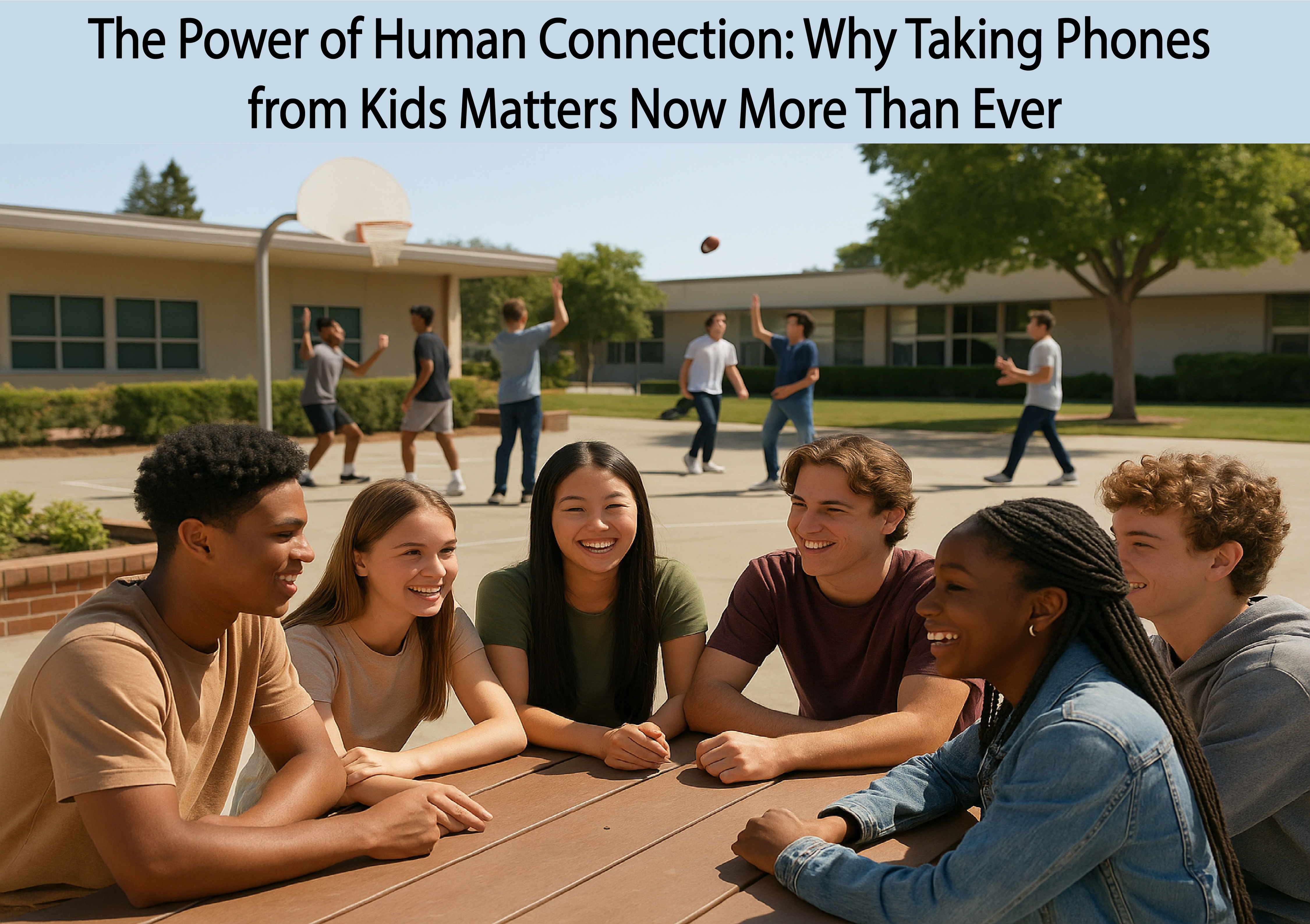
In the recent years working with teenagers, I have felt the dramatic power phones have over our children, not to mention their parents who do much of their professional work 24/7 from them in our constantly connected world. During the last two years, I have become increasingly worried even after banning mobile phones at school in 2022. Why? Artificial intelligence (AI) is blurring the boundaries between reality and virtual solace, too many children are leaning on chatbots when they do have their phones and it’s not to complement human relationships, but to replace them. AI was initially used to offload productivity tasks, and now it’s used for emotional tasks. Imagine that; According to a study of 2000 Gen Zers by Joi AI, a chatbot company, 83% believe they can form a deep emotional connection with AI. This shift isn’t just worrisome—it risks the very essence of humanity and could worsen the mental health crisis gripping our society.
Current data reveals alarming trends as cited by Common Sense Media painting a stark portrait of the growing reliance on AI companions among U.S. teenagers:
- 72% of teens (ages 13–17) have used AI companion chatbots at least once (ScienceAlert, Scientific American, Teen Vogue).
- 52% of teens engage with these apps multiple times per month (ScienceAlert, Spark & Stitch Institute, Teen Vogue).
- 13% report daily interaction with AI companions (Teen Vogue).
- 33% use AI companions for friendship, emotional support, or romantic interactions (Scientific American, Parents, Teen Vogue).
- 31% (roughly one-third) find conversations with AI as—or even more—satisfying than those with real friends (Parents, Teen Vogue).
These numbers are more than percentages. They represent a generation increasingly mistaking digital simulations for meaningful relationships for three reasons to start.
1. Replacing Real Connection with Simulation
Chatbots can mimic emotional warmth and empathy, offering immediate comfort. Yet, unlike real human relationships, they lack depth, vulnerability, and true reciprocity. Human connection can be messy, like some of the greatest challenges we will have to overcome. Statistics show many teens are choosing AI over humans for serious conversations, a shift that could stunt emotional development (New York Post, AP News, Teen Vogue).
2. Emotional Dependence and Psychological Risks
Academic research indicates that people with fewer real-world connections are more likely to turn to AI companions—and that such usage is linked to lower well-being, particularly among heavy users (arXiv). Other studies highlight risks of “artificial intimacy,” where emotional attachments to AI mirror human relationships but lack authenticity, potentially leading to social withdrawal and difficulty forming real bonds (arXiv, Wikipedia).
3. Real Harm: Cases of AI-Driven Distress
Tragically, there are documented instances where emotionally responsive chatbots contributed to crisis situations—including suicides—due to encouragement or misguided responses (Wikipedia). These stories underline how unregulated AI can exacerbate vulnerable states, especially when alternative support systems are lacking.
Why Removing Phones—and Limiting Chatbot Access—is a Critical Step
Taking phones away from kids isn’t about censorship—it’s about creating space. When children are smartphone-free:
- They rediscover the power of presence, empathy, and genuine connection. Without the instant gratification in their hands the potential for them to use their minds and imaginations to be creative and connect with others increases significantly. I watched them pick up a ball and begin kicking it around the field or simply talk to their classmates about virtually everything.
- Family, friends, and communities re-emerge as essential sources of support. Students turn to one another instead of their devices. Imagine a student engaging in conversation with peers or teachers about the many happenings in their lives to get authentic responses by individuals with whom they share a school or family! It matters.
- Kids learn to sit with discomfort, conflict, humor, and joy—things no AI can authentically deliver. Helping students build resilience, problem solving, self awareness, and social awareness to manage relationships leads to developed emotional quotients and happiness. Harvard’s longest, multigenerational study revealed that close, warm relationships are a stronger predictor of happiness, health, and longevity than wealth, intelligence, or social status. AI chatbot access has the potential to do incredible harm to the long term mental health and happiness of our society!
In fostering real connection, we’re not withdrawing a convenience—we’re gifting resilience, empathy, and the ability to flourish together.
The good news is that we can reclaim humanity through connection. The data is clear: AI chatbots are filling emotional voids—but they cannot replace the human heart. As 52% of teens now visit these platforms monthly and 13% daily, we must question what’s being lost: real dialogue, empathy, vulnerability.
By stepping in, setting boundaries, and encouraging face-to-face interaction, we protect more than social skills. We guard against isolation, emotional distortion, and a generation drifting into artificial intimacy. Let’s give our children something truly irreplaceable: the chance to grow, connect, and understand the power of humanity.


